The method
How does the audit work, step by step?
The short answer
The AI Visibility Audit asks ChatGPT, Claude, Perplexity, Gemini and Google AI Overview 50 to 70 real buyer questions (10 per territory), 3 times each, records the 750 to 1,050 timestamped answers, maps every source the engines cited, checks whether your site is readable by AI crawlers, and hands you a prioritized fix list within 48 hours, for $1,500.
Published August 31, 2026 · updated September 20, 2026 · the method is versioned and this page follows it · written by Thibault Genon-Catalot, founder
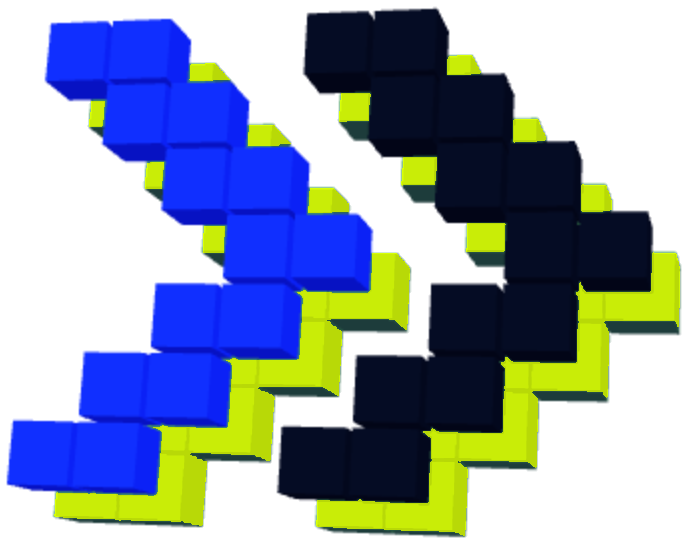
Eight steps
One deliverable per step, named before you pay.
Steps 1 to 4 are the $1,500 audit. Steps 5 to 8 are the execution, sold as The AI Visibility Program or run by your own team from the audit's plan.
Your ranking in AI Answers
10 buyer questions per territory (5 to 7 territories), 5 seeded by you and the rest expanded by us (comparisons, alternatives, buying-intent variants), put to ChatGPT, Claude, Perplexity, Gemini and Google AI Overview, 3 times each. 750 to 1,050 real answers. We record who is named, how often, and who is named first.
Deliverable: the Share of Answer scorecard · day 1 to 2The trusted external sources
Every citation across all the answers, deduplicated and ranked. It splits in two: the third parties the engines trust in your category, which becomes the target list for all off-site work, and the pages your competitors own that the engines quote, which becomes the list of pages you do not have yet.
Deliverable: the source mapping, plus your competitors' winning pages · day 2The ChatGPT seat check
Your category scanned against our directory of all 1,916 apps inside ChatGPT: which competitors already run an app, or whether the seat is still empty. Nobody else has this data.
Deliverable: the seat check · day 2The complete health checkup
35 checks in 4 families, each one pass or fail: can GPTBot, ClaudeBot, PerplexityBot and Google-Extended reach your site; does your content exist without JavaScript; does your brand say the same thing everywhere; and the details that earn citations, natural-language URLs, visible dates, question-shaped titles.
Deliverable: the fix list, written as a developer ticket · week 1The Answer Pages
Pages that settle one buyer question so completely the engines have a reason to quote yours instead of a competitor's. Each one targets a question your measurement says you are losing. How the page is built, what goes where and in what form, is the part we do rather than publish: it is the craft you are paying for.
Deliverable: the answer pages · continuousThe Placements
Work the source map: claim and fuel the review profiles, get into the listicles that feed the answers by writing to their authors, answer the live Reddit and Quora threads, publish long-form LinkedIn under a named person, pitch data to journalist platforms.
Deliverable: the placements log · continuousThe Monthly Study
One small study per month built from data you already own, one surprising number as the headline, syndicated everywhere. Original data is the highest-ceiling citation asset there is.
Deliverable: the monthly study · continuousThe Curve
Same questions, same engines, re-run on a schedule and judged on a four-week rolling average, because AI answers change heavily from month to month. The curve is the report. We run this method on our own site and publish our own curve.
Deliverable: the Share of Answer trend · monthlyWhat we refuse to sell
Two things you will not find in the report, on purpose.
The llms.txt file, sold as a strategy
Some agencies bill real money for creating and maintaining this file.
Ahrefs analyzed server logs across more than a hundred thousand domains and found AI crawlers almost never request it.
We create it because it costs five minutes, and we never charge a strategy for it.
(Ahrefs log study, June 2026)
Schema markup, sold as magic
No published study measures a citation lift from schema markup alone.
It stays good hygiene for other reasons. But it is not what moves an AI answer, so it is not what you pay us for.
Google says the quiet part in its own AI guidance: AI search features “rely on Google’s core ranking and quality systems”, which is why there is no magic file and no shortcut. The parts that do move answers are boring and verifiable: whether the crawlers can read you at all, whether the answer to the buyer's question exists on a page in a quotable form, and whether the sources the engines already trust mention you. That is where the eight steps spend your money.
Questions
Fair questions about the method. Straight answers.
Why three runs per question instead of one?
Because AI answers change from one run to the next, and the sources behind them change too: 40 to 60% of cited sources rotate from month to month (Search Engine Land, 2026). A single run tells you what one user saw once; three timestamped runs per engine tell you who reliably owns the answer. It is also why we judge progress on a four-week rolling average, never on a single reading.
Do you optimize my schema markup?
No, and we tell you why on the report itself: no study has measured a citation lift from schema alone, so we refuse to sell it as a GEO tactic. Same for llms.txt: Ahrefs' server-log research found that AI crawlers almost never request the file. The machine-layer work that does matter is crawler access, content that exists without JavaScript, and entity consistency.
Which steps are in the $1,500 audit, and which are the Program?
The audit is steps 1 to 4: the measurement (750 to 1,050 answers), the map of sources the AIs read, the ChatGPT App Store check, and the health checkup with the ranked fix list that comes out of it, plus the day-90 re-measure as a $200 add-on. Steps 5 to 8, the pages, the placements, the study and the monthly curve, are the execution: that is The AI Visibility Program, from $2,500 a month, 90 days at a time, and your own team can also run them from the audit's first actions.
What do I physically receive?
A written report you can forward as-is: the scorecard with your 5 closest competitors, the ranked source list, the seat check, and the fix list written as developer tickets ranked by expected impact. The raw timestamped answers are available on request.
Free, 2 minutes
Before you buy any audit: run one free check.
5 buyer questions, 2 AI engines, and you see who gets named instead of you. The verdict shows on the page, and a copy lands in your inbox.
Next
See the method priced, next to everyone else’s.
The same audit content sells for $1,500 to $7,500 on this market, usually tested on 10 to 30 prompts, once. We published the side-by-side comparison and the full 2026 price map so you can check that claim yourself. If a free tool has already handed you a score out of 100, here is what that number measures and what it cannot tell you. Our own study of 615 AI answers, and what it says about measuring any of this once, is at /do-ai-answers-change-every-time.